April 28, 2026
How Much Deposit Do You Need to Buy Property in Edinburgh?


Edinburgh is one of the most in-demand property markets in the UK, and one of the most expensive cities in Scotland to buy your first home. Understanding exactly how much deposit you need, how Edinburgh's property values affect your calculations, and what Scottish-specific rules apply can make the difference between a mortgage that works and one that falls apart at the final hurdle.
This guide covers the deposit required for Edinburgh property purchases, from the minimum lenders will accept to the amount that unlocks better rates, with real figures drawn from current Edinburgh market data.
What Is the Minimum Deposit to Buy Property in Edinburgh?
The minimum deposit most lenders will accept for an Edinburgh property purchase is 5% of the Home Report valuation. This applies to first-time buyers and home movers alike.
However, the critical word here is "valuation" and not offer price. Lenders base their loan-to-value (LTV) calculations on the Home Report valuation, not what you agree to pay. In Edinburgh's competitive market, where buyers frequently offer above the Home Report value to secure a property, this distinction directly affects how much deposit you actually need.
If a flat in Leith has a Home Report valuation of £200,000 and you offer £215,000 to win a closing date, your lender will calculate your mortgage deposit Edinburgh Scotland against £200,000. The £15,000 gap between valuation and offer price comes entirely from your own funds, on top of your deposit.
In practice, this means your effective deposit requirement in Edinburgh is often higher than the headline percentage suggests.
How Much Deposit Do You Need at Each LTV Band?
The deposit you need depends on which LTV band your mortgage falls into. Different bands unlock different mortgage products and interest rates.
- 95% LTV – 5% deposit (£12,500)
Fewer lenders, highest interest rates - 90% LTV – 10% deposit (£25,000)
Wider product choice, competitive rates - 85% LTV – 15% deposit (£37,500)
Strong selection of mortgage products - 80% LTV – 20% deposit (£50,000)
Access to some of the most competitive rates - 75% LTV – 25% deposit (£62,500)
Broad access to market-leading mortgage deals
Broad access to market-leading products
The jump from 95% to 90% LTV is typically the most impactful for first time buyer Edinburgh deposit planning. It significantly widens the range of lenders available and reduces the interest rate applied over the mortgage term.
What Deposit Do You Actually Need in Edinburgh? Real Market Figures
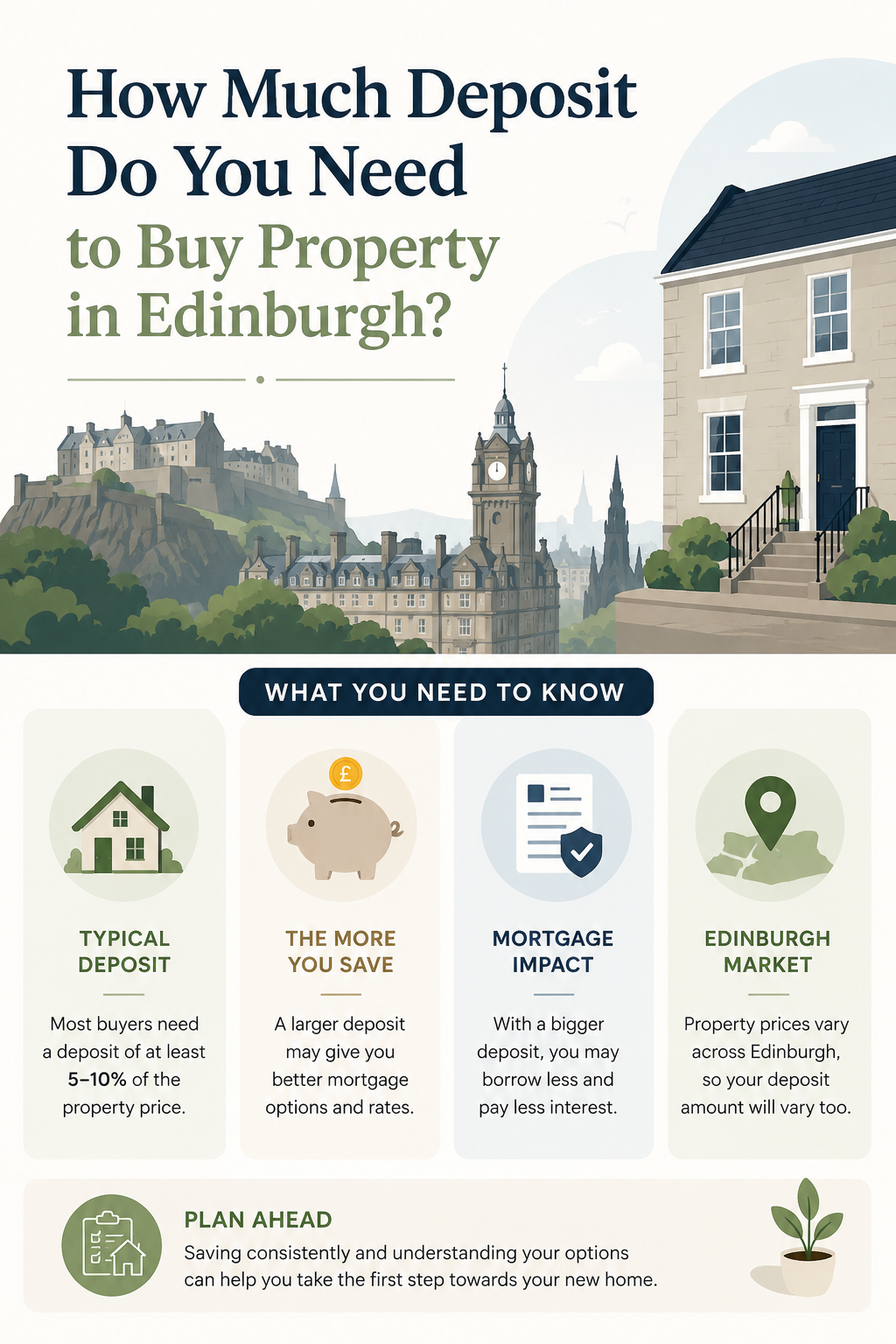
Edinburgh is the most expensive city in Scotland for property purchases. The average house price in Edinburgh reached £295,000 in February 2026, up 3.1% from the previous year, the highest average in Scotland. For first time buyer Edinburgh deposit purposes specifically, the average price paid was £248,000 as of early 2026, representing a 3.3% year-on-year increase.
Using those figures, here is what deposit amounts look like in real terms for an Edinburgh first-time buyer:
- 5% deposit (£12,400)
Entry-level access, limited lenders - 10% deposit (£24,800)
Mainstream lender choice, competitive rates - 15% deposit (£37,200)
Better rate tier, more lender flexibility - 20% deposit (£49,600)
Access to most competitive mortgage products - 25% deposit (£62,000)
Optimal position for negotiating best rates
Recent data shows that first-time buyers in Edinburgh have accumulated an average deposit of around £30,590, representing approximately 10% of their purchase budget. This aligns with the 90% LTV tier and gives access to the broadest range of mainstream mortgage products.
It is worth noting that Edinburgh ranks as one of the top three cities in Great Britain for first-time buyer demand in 2025, with an average first-time buyer asking price of £251,088. That demand level sustains upward price pressure, which means deposit planning needs to account for how Edinburgh prices are likely to move during your savings period.
How Edinburgh's Closing Date System Affects Your Deposit Planning
Edinburgh's property market introduces a specific challenge that does not exist in the same way in England: the closing date.
When a property attracts significant interest, the seller's solicitor sets a fixed deadline for sealed offers. All competing buyers must submit their best offer by that date, without knowing what others are bidding. The seller then accepts the most attractive offer, typically the highest, though other factors can apply.
Between March and May 2025, Edinburgh buyers paid an average of 101.5% of the Home Report valuation to secure a property. Across all areas, 72.6% of properties sold at or above their Home Report valuation.
What this means for deposit planning is straightforward: if you are competing for a property in a popular Edinburgh neighbourhood, budgeting only your deposit percentage against the asking price is insufficient. You need to account for a premium above Home Report value as well.
Example: A two-bedroom flat in Bruntsfield has a Home Report valuation of £270,000. Competing offers drive the accepted price to £285,000, which is 105.6% of valuation. A buyer with a 10% minimum deposit Edinburgh mortgage on valuation (£27,000) plus the £15,000 above-valuation contribution needs £42,000 in total available funds, even though their mortgage is based on £270,000.
Planning your deposit with a buffer specifically for above-valuation offers is not a luxury in Edinburgh. It is a practical necessity in most city-centre neighbourhoods.
LBTT: The Edinburgh-Specific Tax That Affects Your Total Budget
Scotland uses Land and Buildings Transaction Tax (LBTT) instead of Stamp Duty. The rates and thresholds are different, and in Edinburgh they create a significant additional cost that many first time buyer Edinburgh deposit planners underestimate.
Standard LBTT rates (residential, 2025/26)
First-time buyer relief
First-time buyers in Scotland benefit from relief that raises the nil-rate threshold from £145,000 to £175,000. The maximum saving is £600, which is 2% of the £30,000 difference, and there is no upper price cap on the relief, though the benefit remains £600 regardless of purchase price.
What this means for Edinburgh buyers
With the average first time buyer Edinburgh deposit property now costing £253,424, new buyers face an LBTT bill of £1,671, just £600 less than non-first-time buyers. Compare this with buying the same property in Glasgow or another lower-priced Scottish city, where a first-time buyer purchasing under £175,000 would pay no LBTT at all.
According to Registers of Scotland data, just 5% of properties sold in Edinburgh in 2024 fell within the tax-free Band 0 bracket, down from 32% in 2015. Edinburgh's property prices have simply moved far above the LBTT relief threshold, making the tax a meaningful line item in any budget.
For a £250,000 Edinburgh purchase, a first-time buyer would pay approximately £1,500 in LBTT. For a £300,000 purchase, that rises to around £4,600. These amounts need to be funded separately from your mortgage deposit Edinburgh Scotland. Lenders will not include them in the loan.
What Else Do You Need to Budget for Beyond the Deposit?
Your deposit is the largest single upfront cost, but Edinburgh property purchases involve several other expenses that need to be ready before you complete.
Solicitor fees: Legal costs in Scotland are typically higher than in England because solicitors handle both conveyancing and the offer submission process. Budget for £800 to £1,500 on average for a first-time buyer purchase.
LBTT: As detailed above, calculated on the purchase price, payable on completion.
Mortgage arrangement and valuation fees: Budget for £500 to £1,000 depending on your lender and mortgage product. Some lenders absorb arrangement fees into the mortgage rate; others charge them upfront or add them to the loan.
Buildings insurance from completion: Your mortgage lender will require buildings insurance in place from the date you legally own the property, not from the date you move in.
Reserve for above-valuation offers: As covered above, Edinburgh's competitive market means buyers routinely need additional funds beyond their deposit percentage. A buffer of £5,000 to £20,000 on top of your planned deposit is sensible in most Edinburgh postcodes.
Total cash needed beyond mortgage, approximate range for a £250,000 Edinburgh purchase:
- 10% deposit (on £250,000 valuation) – £25,000
- LBTT (first-time buyer) – ~£1,500
- Solicitor fees – £800 to £1,500
- Mortgage fees – £500 to £1,000
- Above-valuation buffer – £5,000 to £15,000
Total estimated funds needed: £32,800 to £44,000
This is why Edinburgh buyers who plan their finances only around the deposit percentage frequently find themselves short when it comes to completing a purchase.
How the Deposit Amount Affects Your Mortgage Rate
Depositing more than the minimum is not just about getting the application accepted. It directly affects the interest rate you pay over the full mortgage term, and therefore the total cost of your purchase.
The relationship between LTV and rate works in steps. Moving from 95% LTV to 90% LTV typically produces a more significant rate improvement than moving from 85% to 80%. The largest gains usually come in the early bands.
As a general principle, each LTV band you improve by, particularly moving from 95% to 90% or from 90% to 85%, can reduce your monthly payment and your total repayment cost materially over a 25-year term. On an Edinburgh-sized minimum deposit Edinburgh mortgage, even a 0.3% rate difference compounds significantly.
A whole-of-market mortgage broker Edinburgh can show you exactly what rate difference each LTV band produces with the lenders currently available to your profile, which changes regularly based on your credit score, income structure, and the property type.
Deposit Sources Lenders Will and Will Not Accept
Where your deposit comes from matters to lenders. Edinburgh mortgage applications require clear evidence of the source of funds, and not all sources are treated equally.
Acceptable sources:
- Personal savings with 12 months of bank statements showing accumulation
- Gifts from family members (with a signed gift letter confirming no repayment is expected and the donor has no interest in the property)
- Inheritance or proceeds from a previous property sale
- Lifetime ISA savings (see below)
Sources that create complications:
- Loans or credit card advances: lenders will not accept borrowed deposit funds. Any personal loan or credit facility used to build a deposit will be treated as a liability, reducing affordability.
- Cash deposits without a paper trail: lenders require documented evidence of where the money came from. Large cash payments into an account without explanation will trigger requests for source of funds evidence.
- Cryptocurrency proceeds: acceptable to some lenders but requires careful documentation of the conversion history.
As part of anti-money laundering requirements, your solicitor will also need to see evidence of the source of your deposit funds, typically 12 months of bank statements for the account the funds will come from, together with written evidence of how those funds were acquired.
The Lifetime ISA: A Deposit Boost for Edinburgh First-Time Buyers
The Lifetime ISA (LISA) allows first time buyer Edinburgh deposit savers aged 18 to 39 to save up to £4,000 per tax year toward a property purchase, with the government adding a 25% bonus of up to £1,000 per year.
For Edinburgh buyers saving over several years, the LISA bonus meaningfully accelerates deposit accumulation. Over four years of maximum contributions, a buyer could accumulate £20,000 of their own savings plus £5,000 in government bonuses, totalling £25,000, before adding any additional savings held elsewhere.
LISA rules to be aware of for Edinburgh purchases:
- The property must cost £450,000 or less. Given Edinburgh's average prices, this limit is workable for most first-time buyers, though buyers targeting larger or more central properties should verify this does not create a constraint.
- The LISA must have been open for at least 12 months before it can be used for a property purchase.
- If you withdraw funds for any purpose other than a first home purchase or retirement, a 25% penalty applies, which effectively recovers the government bonus and also a portion of your own savings.
- The account must be closed when you use it to purchase a property; you cannot retain it alongside a mortgage.
A mortgage adviser can confirm how LISA funds are treated by specific lenders and whether any documentation requirements apply to the government bonus portion.
Affordable Edinburgh Neighbourhoods for First-Time Buyers
Edinburgh's average property price is driven upward by premium areas such as New Town, Stockbridge, and the Grange. For first-time buyers where deposit size is a constraint, looking slightly further from the city centre changes the numbers significantly.
For first-time buyers, areas including Musselburgh, Gorgie, and Dunfermline all offered good options, with a variety of property types and sizes selling on average for less than the LBTT threshold price of £175,000.
Dunfermline offered the most affordable property overall, with two-bedroom flats selling for an average of £141,293, a price point where first time buyer Edinburgh deposit LBTT relief eliminates the tax entirely and a 10% deposit means saving around £14,000 rather than £25,000.
Within Edinburgh city limits, areas such as Pilton, Granton, Craigmillar, and parts of Wester Hailes consistently offer lower entry prices than the well-known central neighbourhoods. Leith and Easter Road remain popular for buyers who want city proximity at a lower price point than Marchmont or Morningside, though premiums above Home Report value tend to be higher in those areas due to demand.
Frequently Asked Questions
How much deposit do you need to buy a house in Edinburgh?
The minimum deposit required Edinburgh property purchase accepted by most lenders is 5% of the Home Report valuation. Given that Edinburgh's average first-time buyer property price sits at around £248,000, a minimum 5% deposit represents approximately £12,400. However, because Edinburgh buyers regularly offer above Home Report valuations, averaging 101.5% of valuation in spring 2025, the practical cash requirement is typically higher. Most first time buyer Edinburgh deposit targets sit at 10%, which works out to approximately £24,800 on the average first-time buyer property, giving access to a wider range of lenders and better mortgage deposit Edinburgh Scotland rates than the minimum 5% tier.
Do first-time buyers pay LBTT in Edinburgh?
Yes, most Edinburgh first-time buyers pay LBTT. First-time buyer relief raises the nil-rate threshold from £145,000 to £175,000, but Edinburgh's average first-time buyer property price of around £253,000 sits well above that threshold. On a £253,000 purchase, a first-time buyer pays approximately £1,671 in LBTT, only £600 less than a non-first-time buyer purchasing the same property. This LBTT bill must be funded separately from the mortgage deposit Edinburgh Scotland and is payable on completion. ESPC has called for the threshold to increase to £250,000 specifically for Edinburgh to reflect the city's property market, but no change has been implemented as of early 2026.
Can I use a gifted deposit to buy in Edinburgh?
Yes. Gifted deposits from family members are accepted by most lenders, including for Edinburgh purchases. The donor is required to sign a letter confirming the funds are a gift and not a loan, that they have no interest in the property, and that they do not expect repayment. Your solicitor will also need to verify the source of the gifted funds as part of anti-money laundering requirements. Gifted deposits are common in Edinburgh and most lenders process them routinely, though requirements vary. A mortgage broker Edinburgh can confirm what documentation your chosen lender will need.
What is the deposit needed for an Edinburgh new-build?
New-build deposits in Edinburgh follow the same minimum deposit Edinburgh mortgage LTV rules, but some lenders apply more conservative criteria to new builds. A 10% minimum deposit is more commonly required by lenders for new-build purchases than for existing properties. Developer incentives such as cashback contributions or part-exchange schemes can assist with deposit building, but lenders review and sometimes cap these contributions, so it is important to confirm how any developer incentive will be treated before relying on it in your calculations.
Is a 5% deposit enough to buy in Edinburgh?
Technically yes, in the sense that lenders offer 95% LTV products. However, a 5% deposit required Edinburgh property purchase carries meaningful risks: fewer lenders are available at this tier, interest rates are higher, and you have no buffer if the property is valued below your offer price or if the lender applies additional criteria. Given that Edinburgh buyers regularly need to offer above Home Report valuation, a buyer with exactly 5% of the valuation in savings may find their deposit insufficient to cover both the minimum LTV requirement and any above-valuation contribution. Most mortgage advisers working in Edinburgh recommend saving to at least 10% before entering the market if circumstances allow.
How long does it take to save a deposit for an Edinburgh property?
That depends on your income, expenses, and whether you use tax-efficient vehicles like a Lifetime ISA. At the Edinburgh average first time buyer Edinburgh deposit price of £248,000, saving a 10% deposit of £24,800 at £600 per month takes just over three and a half years without any government bonus. Using a LISA and maximising contributions each year accelerates that timeline. A mortgage broker Edinburgh can model realistic savings timelines based on your specific income and outgoings, and identify whether entering the market earlier with a smaller deposit makes more financial sense than waiting for a larger one.
Final Thoughts
There is no single answer to how much deposit required Edinburgh property purchases need. It depends on the property you are targeting, the neighbourhood's competitiveness, your income, and how much of the mortgage market you want access to.
What is consistent is that Edinburgh requires more cash than Edinburgh's headlines suggest. The average price, the above-valuation bidding environment, the LBTT bill, and the legal costs all need to be in your budget before you start making offers. Buyers who plan around only the deposit percentage typically find the complete picture larger than expected.
Pelican Finance works with first time buyer Edinburgh deposit clients across the city, from initial deposit planning through to mortgage offer, with whole-of-market access and practical knowledge of how Edinburgh's property system affects what lenders will and will not accept. A conversation at the planning stage costs nothing and typically saves considerably more.
Pelican Finance Limited is authorised and regulated by the Financial Conduct Authority (FCA register reference 731937). Your home may be repossessed if you do not keep up repayments on your mortgage. The information in this article is for general guidance only and does not constitute financial advice. For advice specific to your circumstances, please contact us directly.